
Categories
real estate, chattanooga traffic, moving to chattanooga, chattanooga realtors, why chattanooga, traffic in chattanoogaPublished December 8, 2025
Chattanooga Traffic & I-24 Widening: What 14 Million Lost Hours Really Mean for Commuters and Homeowners

Smith Property Partners | Chattanooga Real Estate
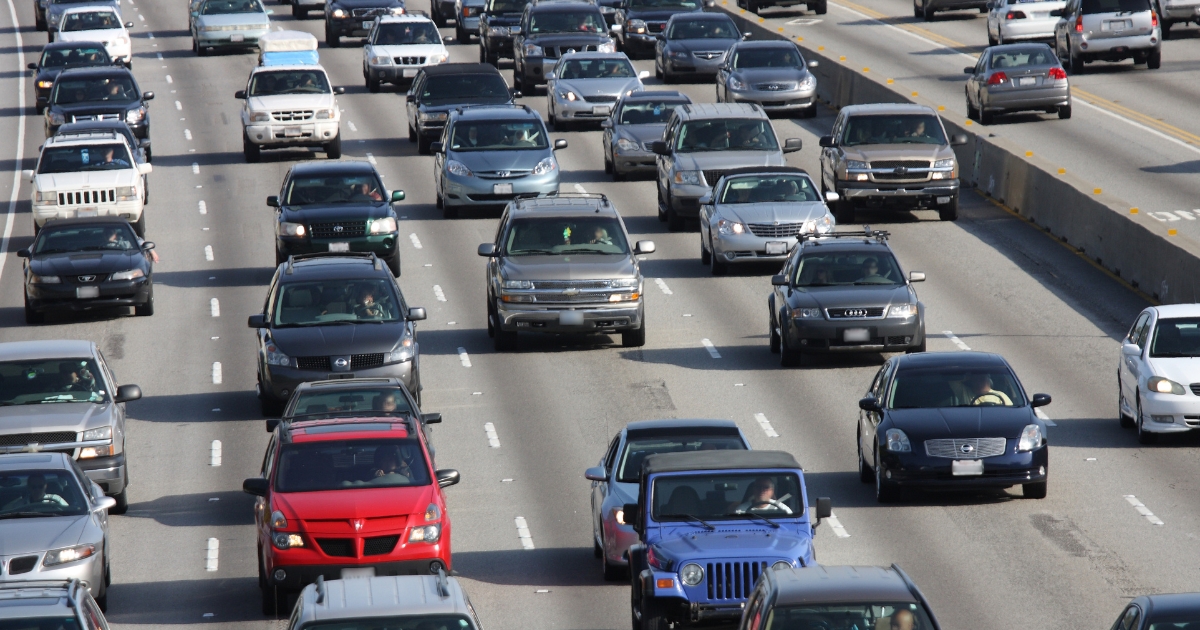
If you’ve spent any time on I-24 around Moccasin Bend, you already know: traffic is no joke. Morning or evening, it can feel like the interstate has turned into a parking lot.
Two recent pieces from the Chattanooga Times Free Press dig into what’s really happening on our roads—and what’s coming next for drivers, commuters, and homeowners. Rather than bash Chattanooga, I want to unpack those articles, highlight the positives, and talk about what this means for your daily commute and long-term home investment.
Chattanooga Commuters Lost Over 14 Million Hours in Traffic
In December 2025, the Times Free Press reported that Chattanooga commuters lost over 14 million hours in traffic in 2024, the most on record for our city.
Their promotion post for the article put it bluntly: Chattanooga commuters “wasted more time and gas than ever before while sitting in snarled traffic in 2024,” and our metro now ranks among the top 101 U.S. cities for delays.
What that means in real life:
- Roughly a full workweek or more per driver lost to congestion each year
- Extra money burned on fuel while sitting in traffic
- Less time with family, less productivity, and more stress
That can sound grim—but it’s also a symptom of something important: Chattanooga is growing, and we sit at the heart of a major freight hub.
Why Chattanooga’s Traffic Is So Intense for a City Our Size
Chattanooga isn’t Atlanta, Nashville, or Dallas—but we play a much bigger role in the national transportation network than our size suggests.
Key factors:
- We sit in the middle of “Freight Alley,” where a huge share of truck-borne freight moves through Tennessee, Georgia, and Alabama
- Three major interstates converge in our region
- The Moccasin Bend corridor on I-24 is a critical connector between manufacturers and distribution hubs across multiple states
In other words, we get big-city freight and traffic pressures layered onto a mid-sized metro. It’s frustrating at rush hour—but it’s also part of why our region is economically strong and attractive to employers.
The I-24 Moccasin Bend Bottleneck: What the Widening Plan Actually Does
A July 9, 2025 article, “Chattanooga residents talk proposed interstate widening,” focuses on the I-24 widening around Moccasin Bend.
From that report, here’s what’s planned:
- More capacity: Add another 12-foot lane in each direction on I-24, with 12-foot shoulders, over about a 10-mile stretch divided into three segments
- Massive usage: More than 114,000 vehicles a day travel in both directions through the Moccasin Bend corridor
- National bottleneck: The corridor is listed among the top 100 worst bottlenecks in the country, ranked 56th by the American Transportation Research Institute
- Funding & timing: The state has allocated about $246 million for the project in its 10-year plan. If fully approved, construction could begin as early as 2027 or 2028, and will include replacing some aging bridges
For drivers and homeowners, that means the state isn’t ignoring the problem; it’s committing serious money and planning to keep people and freight moving through Chattanooga.
Will Adding a Lane Fix Chattanooga Traffic?
At public comment sessions, residents raised a smart concern: is widening I-24 really a long-term solution, or just a short-term Band-Aid?
As one resident quoted in the article put it, “one more lane is not going to fix this.” They referenced research showing that new lanes can actually encourage more driving, a concept known as “induced demand.”
Shannon Millsaps, COO of Thrive Regional Partnership, echoed that view. She noted that in some places, adding lanes temporarily eases congestion, but in others, traffic eventually climbs back to previous levels—or worse. That’s why she says widening should be viewed as one piece of a broader strategy, not the only solution.
Thrive and other regional leaders point to a more complete approach that includes:
- Improving multimodal transportation so not every trip requires a car
- Freight-focused technology and routing to move trucks more efficiently
- Smarter land-use planning so homes, jobs, and services are better connected
As a realtor who studies both the housing market and the local infrastructure, I agree: the I-24 widening matters—but it’s not the whole story.
What This Means If You Live in Chattanooga (or Plan to Move Here)
Chattanooga is still a very livable, highly connected city—and I don’t say that lightly. Here’s how I help my clients think about traffic, commuting, and where to live.
1. Your Commute Is Part of Your Home Search
When we talk about neighborhoods, we dig into more than bedrooms and bathrooms. We look at:
- Where you work—and what your hours actually are.
- Where your kids go to school and play sports.
- Whether your typical routes force you through Moccasin Bend at peak times or let you stay more local.
- Alternate routes that keep you off the worst choke points when possible.
A great house in the wrong location can cost you dozens of hours a year in the car. A smart location can give you that time back.
2. Traffic + Investment = Long-Term Opportunity
From a real estate and investment perspective, congestion and infrastructure projects tell us something:
- Areas that attract state investment—like the I-24 corridor—are seen as economically important.
- Regions that proactively improve roads, freight, and connectivity tend to see stronger long-term property values than places that ignore those issues.
- Growth and traffic can be frustrating day-to-day, but they often signal underlying economic strength.
When we look at homes together, we talk about how these projects might affect your future value and quality of life.
3. The Right Neighborhood Can Save You Hours Every Month
The big regional numbers—14 million hours of delay—matter. But what matters most to you is your daily reality.
Depending on your lifestyle, it may make sense to:
- Live closer to your main job center or downtown.
- Choose a community where you can “live local” most days and avoid interstates.
- Focus on neighborhoods with strong local amenities so you’re not crisscrossing the city constantly.
We map this out together: “If you live here and work there, this is what your commute usually looks like at 8:00 a.m. on a Tuesday.”
How Smith Property Partners Helps You Navigate Traffic and Lifestyle
At Smith Property Partners, we don’t just help you buy or sell a house—we help you design a lifestyle that works.
When we serve buyers and sellers, we:
- Factor in current Chattanooga traffic patterns and the I-24 widening plan.
- Look at how your daily routes intersect with known bottlenecks like Moccasin Bend.
- Talk through how upcoming projects and regional growth may affect your commute and long-term home value.
- Use a concierge approach—contractors, staging, neighborhood insight—to make your move feel easy and supported, not stressful.
My goal is simple: make your life easier, not harder—starting with where you live and how you get around.
Thinking About Moving in or Around Chattanooga?
If you’re already here and wondering how traffic and the I-24 widening could impact your neighborhood—or if you’re considering relocating to Chattanooga—I’d love to walk you through it.
We’ll look at:
- Your daily schedule and priorities
- Neighborhoods that fit your budget and your commute
- How Chattanooga’s growth, congestion data, and infrastructure plans line up with your long-term goals
If you’re ready to talk about Chattanooga real estate, traffic, and quality of life all in one honest conversation, let’s connect and build a plan that works for you.
Call Us Today - 423.635.3507

Sean Smith
Founder & CEO | Smith Property Partners | Keller Williams Greater Downtown Realty
or another way